2014. május 16., péntek

Michael Thompson, the session king (2012)


Countless studio recordings with superstars such as Michael Jackson, Celine Dion, Madonna, Michael Bolton, Eric Clapton, Joe Cocker, Cher, Sarah Brightman, Mariah Carey, Toni Braxton, and Michael Bublé, distinctive guitar tone, amazing sense of melody - that's Michael Thompson, guitar player extraordinaire, who can be easily considered as one of the greatest session guitar players of all time. Aside from his session career, the guitarist has his own band, The Michael Thompson Band, which has released a killer melodic rock record in 2012 - after a 22 year hiatus. That was more than enough to ask him a thing or two...


What was the reason you decided to create yet another MTB record – 22 years after the eponymous debut?

I thought that the time was right to do a new MTB album even though it had been 22 years since the last one. A lot of it had to do with finding a great singer and writing the kind of songs that I knew would work for a record like this.  I’ve done a lot of different kinds of records but I wanted to return to my rock roots.


Why was MTB so short lived at the end of the '80s, when guitar driven AOR music was so popular? I mean, you got a major label deal with Geffen, got radio airplay, recieved great responses, etc...

The original MTB was so short lived because our whole deal revolved around a manager/producer that neither Moon Cahoun nor I wanted to continue working with. Before we got a deal and made that first record we were actually a band playing clubs around L.A. for about 5 years. The band was called Slang and the original singer was Billy Trudel.


What was your basic concept when you started writing the new tunes, what kind of record was in your head?

The basic concept with “Future Past” was to write songs that would fit in the “melodic rock” genre which only means that we set out to make a rock record as opposed to pop/r&b…I just write the way I write which is really no different than the types of things that I was writing in the 80s.


How was the writing process? Did you write everything all by yourself, even the lyrics?

I wrote all but two of the songs with singer Larry King. We just clicked from the first song which was “Can’t Be Right” and continued from there. Larry has a lyric writing partner named Joie Scott that lives in Nashville. She collaborated with us on all the songs after we came up with the initial track. She was fantastic at coming up with some really substantial lyrics. The process was me playing Larry a guitar riff or basic idea then he would start singing the first thing that came to him. Oftentimes these initial ideas would be the hooks for the final tune. Then I would arrange the songs and do all the guitars to a drum machine. I would then send all my tracks to Larry in Chicago where he would add real drums and bass at his studio. The drummer and bass player were his guys who I had never met! I loved what they did on the record though…


This time lead vocal duties were done by Larry King, who has a really impressive, powerful voice. How did you find him?

I met Larry over 10 years ago when he called me to play on his project Soliel Moon. He had been using Dann Huff but Dann had gotten too busy producing so he recommended me. It was a fortuitous meeting because I ended up working with Larry on many projects over the years that he was producing. I always loved his voice and when I decided to do this new MTB album his name was the only one that was on my list!


How is your current relationship with the original MTB vocalist Moon Calhoun? Didn't you try to bring back him for that new record?

I will always think of Moon Calhoun as one of my closest friends and one of my favorite singers ever. We actually had talked about doing another record together and maybe we still will. It was just that with Larry I had a co-writer that worked real hard at turning my song ideas into finished songs. Plus the fact that Larry has probably the strongest rock voices of anyone that I’ve ever heard and he can nail the high vocal melodies every time.


As I see the credits, Sahara Thompson sang background vocals on the song Can't Miss. Is she your daughter?

Yes, Sahara is my beautiful 20 year old daughter. She loves music – she sings and plays piano and guitar plus she writes her own songs and works Protools and records her own sessions. She and my son Zach ( he’s a drummer) are doing gigs around L.A. with their bands.


There are plenty of tasteful riffs and memorable solos on the album. Usually how do you build up the guitar parts? Do you have your own method for this activity?

Since being a session player has been my career for 30 years I’m very comfortable coming up with parts and creating arrangements – that’s what I do. I’ve learned a lot about putting a song together from working with the best people in the world. It all starts with the song but once I have a good song then the fun begins for me because I love to layer guitars and paint pictures with my music. I have always been a stickler for having great solos. I usually get a good opening phrase and take it from there.


What is the most important thing in a guitar solo for you as a musician?

You have to grab the listener with your solo. It must have sing-able melodies in it. It must be soulful and have a lot of feeling that leaps out of the speakers. I always try to construct solos that will stand the test of time – there can’t be anything about it that will bug me 5 or 10 years from now.


What is the biggest difference between recording your own stuff and working for somebody else as a hired gun?

There really isn’t much difference in how I approach playing on my own stuff as opposed to playing on other people’s music. In fact, the way I always think when I’m working on someone else’s track is: “What would I do if this was my song?”. If you take that approach to session playing you will be able to give the most of your own style to the record. From many years of playing on records I know the kind of things that people like to hear because it’s usually the same stuff I like to hear on a record. Of course when you’re working for someone you need to be aware of what they are envisioning for their music and you must make sure that you tune in to what they want.


Did you initially want to be a session guitarist rather than a rock star who is standing in the spotlight?

I always wanted to be a rock star (of course) but I got a chance to do some recording when I was a teenager in a real studio and I was in love with the whole process of recording. I also became fascinated with the guitar parts that I was hearing on songs on the radio and I dreamed of someday being the guy who would play those parts…I guess that I have gotten a chance to live that dream. This way I’ve gotten to contribute to a lot of people’s music while still maintaining a bit of my own identity…


Is it true that before Dann Huff moved to Nashville, he told all the producers he has worked with to call you instead of him?

It is true that Dann was very helpful to me by recommending me to a lot of producers that he was working with when he left L.A. to move back to Nashville to pursue his producing career. I had been in L.A. since ’79 working my way up the session ladder – clawing my way up the ladder.  I had worked with a lot of people and done a fair amount of work and was kind of “bubbling under” ready to join the “A” team of studio players. The recommendations from Dann were like giving me his “seal of approval” that served as a confirmation of my abilities.


Do you know exactly how many records did you make as a session guy?

I have never counted the records that I’ve done…I do know that one week in ’96 I was on 5 of the Top 10 singles on the Billboard Hot 100 chart!!!


When you take a look at your career, which of your sessions were the most fun and where did you collect the most useful experiences?

I had many great recording experiences over the years. Ones that come to mind: Working with Mutt Lange on Shania Twain’s “Up” album. He was my idol and I ended up on 18 songs on that record – Mutt is a genius. I loved working with Quincy Jones on his “Q’s Juke Joint” album – there’s only one Quincy! Getting the call to be the guitarist for “Animal Logic”in ’88 was HUGE for me. The Police were my favorite band and I was a really big Stanley Clarke fan. It was definitely a thrill for me to do that record. Working with Michael Jackson on “Earth Song” was cool..I remember showing him how an ebow works. There were records that I did that weren’t huge hits but I did some of my best work on them like a couple of albums with Corey Hart and the first Coors album. I think the first big hit I played on was “When A Man Loves A Woman” for Michael Bolton. I loved being able to hear myself on the radio!!! A song that I was able to contribute a lot to was “The Power Of Love” for Celine Dion…she was fairly unknown then and that song really made people aware of her – and me! It was number one for eleven weeks. Getting a call from Babyface was also a huge thing for me. The first thing I did with him were the songs for “Waiting To Exhale” – we hit it off and he ended up call me to play on a lot of his productions including “Change The World” for Eric Clapton. I also did a DVD with him called “Live in NYC” that a lot of people love. The biggest thing in my recording career was working with producer David Foster. I started working with him in 1990 and for 20 years I’ve played on most of the records that he’s done including all the number 1 hits in the ‘90’s and beyond. I have learned from all these people and they might have learned a little bit from me.


Any session you have regretted and would forget?

I have no regrets. I think out of all the sessions there was 2 or 3 that I didn’t hit it off with the producer or artist – that’s just the way it is in life.


If somebody want to be a good session player, what advice could you give? What are the most important requirements?

The most important thing that you have to have going for you is CREATIVITY!!! Yes, you need to be likeable and easy to work with and you need to be on time and have your sound together but none of that means anything if you can’t deliver something that adds to the recording. You must be able to hear a track that you’ve never heard before and create a part that will add a vibe or a feeling to the record. Mutt Lange told me that” You’ve made my demos sound like records!” An exaggeration for sure but a high compliment nonetheless.

Back to the record: what kind of gear did you use during the recording process? I mean guitars, pickups, strings, amps, effects pedals, etc.

I used a lot of gear when recording the new MTB record. When I’m searching for the right sound while doing a record I’ll try everything at my disposal. For amps I have a couple of old Marshalls that I like. For some of the stuff I went direct with a Randall RM4 through a Carl Martin Rock Bug. I actually haven’t been mic’ing cabinets for years. All my amps go through a Radial JDX amp D.I. that I send through my rack. I still go through a speaker cab for a load but all my sound comes from the JDX. My rack has an Eventide H-3000 DSE that I’ve used on every record that I’ve done for 20 years and an Eventide Eclipse that I also use a lot. Guitar-wise I’ve been playing mostly guitars that have been made for me by my friend, Greg Back. I pretty much used his guitars exclusively on this record along with a Tele and my trusty old Strat. For pedals, I am the PEDAL KING!!! I used what ever fit the song. I actually don’t use that many pedals at the same time – mostly just to shape my tone. Strings are Ernie Ball 10-46 and picks are Snarling Dogs – the orange ones with the grit.


Just in brief – Strat or Les Paul?

I prefer Strat type guitars over Les Pauls. Mostly because that’s the body and neck scale that I’m used to. I love Gibsons too.


Humbuckers or single coils?

On the MTB album I used more humbuckers but in my session work I tend toward single coils more. The Greg Back that I used for most of the solos has Raw Vintage humbuckers that I think sound fantastic.


Low gain or high gain amps?

Definitely a fan of lower gain amps. I would rather add a pedal to get more overdrive than play through a saturated amp. I like the clarity that you can get when the amp isn’t too fuzzy.


British or American characteristic?

After 40 years of doing this there really are only two amp types for me – Fender and Marshall and I love them both equally.


Light or heavy strings/picks?

I like high action on my guitars and the 10-46 gauge feel great to me. I like heavy picks that I hold sideways and I like when they have some rough “grit” on them.


Rack stuff or stompboxes?

I like pedals for what they do and rack stuff for the more “expensive” sounds…I use them both.


Floyd, vintage whammy, or fixed bridge?

I have had a Floyd on any of my guitars in many years. That’s one thing gear-wise that’s different from the first MTB record in ’88. I had a guitar with a Floyd back then and now I only use Vintage style trems.


Any chance to more MTB records in the future?

Larry King and I have already started writing for our next record. I think that if people like this one we will definitely make another one (or two)… I also would like to play some dates in Europe with the new MTB, possibly as a package tour with my friends Mitch Malloy and Jeff Paris.


A few years ago you released a great album with the TRW project, and also did an instrumental record. Will you ever continue these stories someday?

For now I don’t have any plans for any instrumental records. I feel that I’ve covered that side of me pretty well with “The World According To..” and “M.T. Speaks”. The singer for TRW (Mark Williamson) has been stricken with Parkinsons disease and it would be a hardship for him to do that band again.

www.michaelthompson.cc

Freakin' awesome - interview with Mattias IA Eklundh (2011)

Swedish guitar freak Mattias IA Eklund is not just a hell of a player who brought never before heard chops to shred guitar in the last couple of years, but a very funny guy to talk. Hope you Folks out there will enjoy this article as much as I did!


Let's start with the early days! At what age did you start to play the guitar and how do you remember your very first musical steps?

IA: It all started with Kiss and AC/DC for me. I was around six when I got my first Kiss album (Destroyer) and Swedish national television broadcasted an entire AC/DC concert the year after, God bless them. I couldn't believe the raw energy of Angus and the guys. Even managed to break the Eklundh family sofa in sheer excitement over what I saw and heard. I also loved the idea of spitting blood and fire on stage like Gene Simmons. A few years later I saw Frank Zappa live and it messedme up pretty bad too. Initially I began playing the drums (still do)but wrote primitive three chord songs with appropriate titles likeHomework Rots my Mind and Go to Hell on guitar. At the age of twelve I dropped the drums as my main instrument for the guitar and begun practicing fanatically, around ten hours ever day after I quit school when I fifteen-sixteen. I got frustrated after a while that I didn't know what to call the various modes and chords I was using. So I went to the library where I studied music theory from books, learned how to read and write music. This is pretty much how I grew my own moustache, so to speak.


Were your musical desires supported by your parents?

IA: Yes, very much so. I am grateful every day they supported me when I needed it the most. They could see that I had genuine passion for music and instead of fighting it, like most folks would do, they embraced it. I think they knew it would blow up in their faces otherwise. I have four elder sisters they tried desperately to raise in a good way. I was a mistake that sort of popped out of my mother when she was 38. My parents have always been insanely cool with what I do and quite proud that I have managed to make a fine living on my tunes for the last 23 years professionally.


Can you remember your very first piece of gear?

IA: Certainly. The guitar was a dreadful Duke Telecaster copy that was impossible to tune. After that I got me a Vantage Flying V that was slightly better. Spent an entire summer looking like the Hunchback of Notre Dame with the guitar between my legs, riffing my brains out after Kill 'Em All with Metallica was released. Amp wise I plugged into all kinds of crap but for practicing I used a Sharp transistor radio that was also used on the Fate album Scratch 'n Sniff and the first Freak Kitchen release Appetizer. I have never been a gear guy but merely interested in the actual playing. I detest foot pedals and racks. Who were your earliest musical influences? IA: Besides Kiss, AC/DC and Frank Zappa, I was deeply into Iron Maiden, Alice Cooper, Metallica, Slayer, Van Halen but also stuff like Mahavishnu Orchestra, Django Reinhardt, Miles Davis and tons more. 


Are you a self taught player?

IA: Very much so, yes. I took a flute lesson in school when I was ten and didn't like it at all. Since then I have walked the road less traveled. Maybe it's not widely known that you were a member of the Danish hard rock outfit Fate in the early '90s. How did you get there? IA: I got the gig as a nineteen year old by going to Copenhagen equipped with my guitar. I thought everything I had recorded up until that point was crap. I learned their latest album and had a shot in the drummer's living room where I played to the record, freak-style, how I wanted it to sound. I could see the guys smiling and nodding to one another as my confidence grew. All the hordes of players before me brought overproduced tapes with their playing. Better to do the real thing apparently. I saw you on stage at the Musikmesse twice, and was always freaked by your eclectic style built from dissonant intervals, exotic lines/scales, whammy bar antics and crazy harmonics - all in all, it's a so damn unique way of playing. How do you describe this approach? IA: Thank you for your kind words. I do what I do and don't pay it too much attention. I have developed my homegrown style for quite some time now and the cool thing about getting older is that you refine your life, playing and know better who you are and how to get that through in your music. To use a cliché, I make the music I want to hear but can't find anywhere.


I think your technical mastery is awesome, all the shred-tools from sweeping to rapid fire alternate picking to tapping are in perfect balance in your style. How do you see, is there any technique out there you should be better?

IA: Oh, I suck on so many things! All of it could be better and little by little I get there. However it is about having something to say more than actual technique. I use whatever ways I can to get the sound in my head out through my fingers. I am terrible at playing other peoples stuff. Don't know a single tune from start to finish that I didn't write myself whereas colleagues and friends like Bumblefoot and Guthrie Govan can sit in anywhere and get away with it.


Are the abilities of reading sheet music and understanding theories important for a rock guitar player in your opinion?

IA: I think it is unless you want to limit yourself. I grew tired of the Church modes and the minor pentatonic scale quite early on and got into more exotic and unorthodox tonality. In order to fully understand it and how to use it, you need the theory and also philosophy behind it.


As a guitar player, I really enjoy you collection of exotic scales on your website, they could open up new doors. How did you get into the world of scales that deep?

IA: I remember my brother in law handing me a transcription book of John McLaughlin and Mahavishnu Orchestra's Inner Mounting Flame. That opened a lot of doors for me in my teens, sinking my Viking teeth into modes like the Enigmatic, Lydian Dominant, Melodic Minor, e t c. Thank you, John. McLaughlin is the one to listen to if you need to move on with your musicianship if you ask me. He rules.


A lot of players feel at least once in their lives that they could not improve their playing anymore, and no chance to step up on a higher level. What advice could you give to them?

IA: Don't stop. I find it sad so many fine players dropped off along the way. You need to focus. Turn off your damn smart phones, get offline, go outside for long walks, get real, play for many, many hours straight to overcome the licks and tricks you normally use. You have to cleanse yourself. I would never have any internet connection nor phone in my studio for instance. You get distracted from what is important. Most shredders prefer the highest gain settings for the sake of the easiest fast playing, but they forget that it could kill the tone, which would become quite one dimensional.


You are considered as a shredder, but got a pure, organic EL34 powered British tone even when you're soloing. How did you find this holy grail of sound?

IA: It is spelled Laney amplification. Hard working tube amps are instruments of their own and should be treated as such. You play the amp almost as much as the guitar. I loathe digital amplifiers and re-amping is the work of the devil. There is nothing more unmusical. You need to struggle with the amp a bit. The Laneys are not necessarily easy to use, they are beasts and have to be controlled or else they will take over. If treated well they will however give you such an amazing tone. I have used the gear since 1996 and adore it. 


How are your current amp settings both in the studio and on stage?

IA: Same thing. I don't do anything different whether I am in the studio or play live. It is either the new 120W Iron Heart, GH100R or VH100L cranked up high to make the tubes respond. We recently did a US tour with my band Freak Kitchen and in New York the very experienced sound man said he never heard volume like that from a guitar rig in his entire life. It has to be good volume though. Then you can be truly loud in a groovy way.


Which speaker types do you like more, Vintage 30 or Greenbacks or something else?

IA: Gee... I am not even sure what is inside my cabinets. I know they are Celestions... Sorry, I am awful when it comes to gear. I have to ask my guitar tech, Fredrik. Maybe he should do this interview instead of me?


Do you use some kind of overdrive in front of the amp for boosting?

IA: Nope. Nothing. The more crap you put in between your guitar and your amp the further away you get from what is really you. Keep it simple. To the point.


How is your pedal board? I guess you might not use too many effects... IA: I don't have a pedal board I am afraid... A volume pedal from Jim Dunlop and sometimes a wah-wah, that's it. Potent. No bull.


Could you introduce your signature Caparison Apple Horn guitar?

IA: To me it is the most stunning instrument on the planet. I don't need anything else. It is well-balanced and has an almost acoustic feel to it. 27 frets, signature pick-ups, devil tail headstock. It also looks cool! I have been with Caparison since 1996 same as with Laney.


It has a True Temperament Formula 1 fretboard. What did you think when you first saw Anders' revolutionary idea for the perfect intonation?

IA: I can not praise Anders enough. He changed everything. Guitar playing has never been this much fun. He is the best together with Caparison guitars' Itaru Kanno who are designing my Apple Horns. Genius gentlemen. I truly believe that True Temperament frets are the best thing that happened to guitar since the invention of the string. There is a video out there on YouTube where I play it for the first time (I wasn't aware being filmed) called Warming up for Beethoven. You can tell from watching it I am flabbergasted from the divine intonation. Breathtaking invention. Anders Thidell for president!


Wasn't it strange playing on that for the first time? I mean, you have to learn new fingerings, haven't you?

IA: It takes no more than five to ten minutes to get used to it... And then there is nowhere back since you realize how much regular frets suck! I strongly believe it is better for the hands and much more organic. Try it!


Most players always change the pickups in their guitars during their way of the ultimate tone quest. What about you?

IA: Not really. Again, I am such a simple schmuck. Sure, I have a few Seymour Duncans and what not but I can't hear that big difference compared to my own pick-ups, so...


What kind of string and plectrum gauges do you prefer, light or heavy?

IA: I use DR strings and Dunlop 2.0 mm picks. Depending on what tuning I am using (I use six different) I use different gauge. For regular tuning it is 009-042. For my Bbm13 tuning it is 011-052. The whole nine yards.


Please tell us about the annual Freak Guitar Camp you host!

IA: Freak Guitar Camp is my favorite time of the year and I have had the camp each summer in August for the past twelve years. It is the time where I truly need to get my butt together and come up with new things constantly. You can't hide for weeks in front of very dedicated musicians from all over the world. You need to break new ground and challenge yourself. Each camp I write brand new backing tracks packed with various ways to approach the guitar. It is a wonderful kick in the butt if you are stuck in your same old licks. Check www.freakguitar.com for more information.


Your kitchen is quite silent for a while. What kinda freak things are you cooking these days?

IA: So much music being prepared you wouldn't believe it! It is going to be a feast to remember in 2012. First dish to be served is Freak Guitar - The Smorgasbord which just might turn into a double album and released on Steve Vai's wonderful Favored Nations label before summer if all goes as planned. Then we plan to release the next Freak Kitchen album late next fall. On top of this my buddy Jonas Hellborg and myself will release an album as well together with drummer Ranjit Barot. Stay tuned.


You just played a guest solo for my dear friend Jonas Tamas' new record. Did you enjoy this session and what do you think about this young Hungarian player?

IA: I think Jonas is stunning, very versatile with lovely tone. Good stuff awaits him around the corner if keeps working hard and stay true.


During the last couple of decades generations of Swedish musicians/bands reached international acclaim from ABBA to Europe to Roxette and countless others in between. What do you think, what do swedish people do better than any others when it comes to music education?

IA: This is really hard to say. Sweden is great place to live. I adore the country. Loads of Swedes complain like crazy but when you travel the Earth like I do, it is easy to see how insanely well-off we are. Nobody lives in Sweden. We are around nine million people in one of Europe’s largest countries. Plenty of space for everyone. Being a musician is fairly accepted, I think. We have lots of music schools. You can pick up any instrument and try out. (This wasn’t for me obviously but I do think it is a tiptop idea). The winters are cold and harsh and there is not much to do but to stay inside and grow your own moustache, practice your instrument, write tunes, e t c.

Photos: Lennart Sjoberg (www.lennart.se)

www.freakguitar.com

2013. május 7., kedd

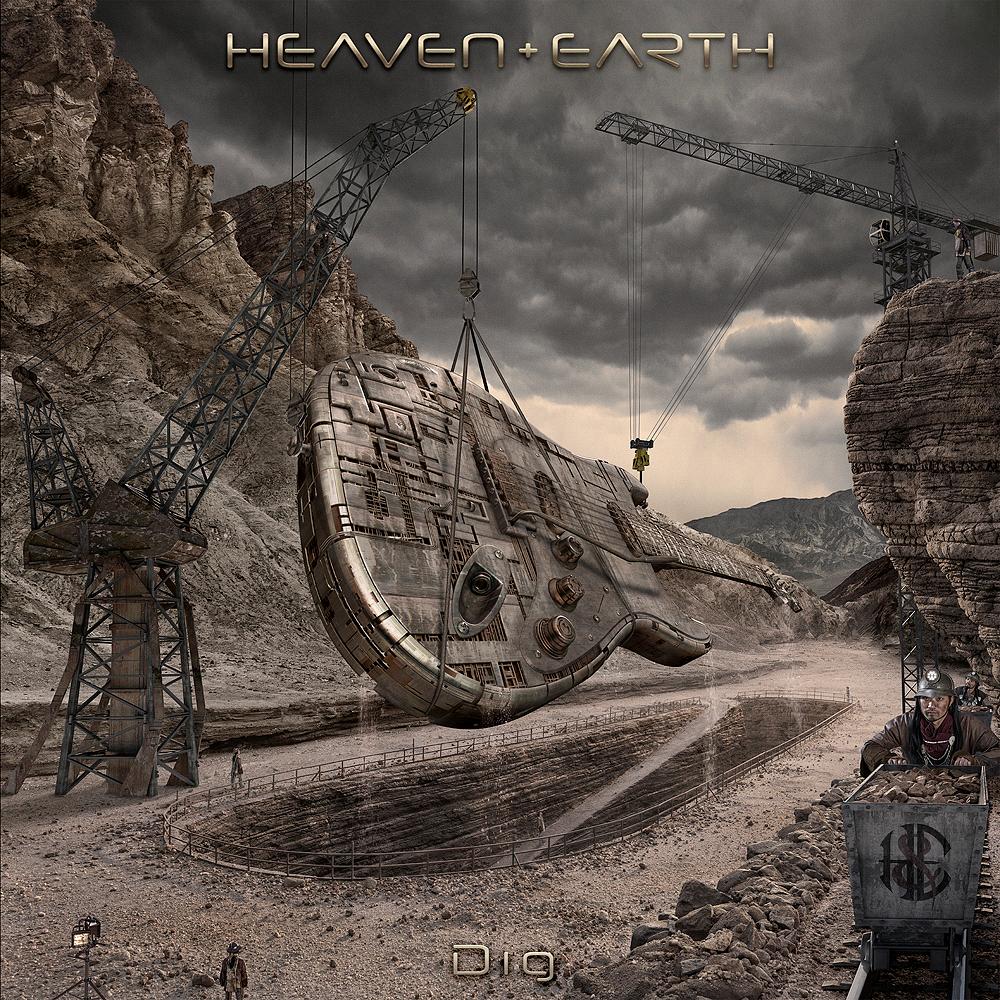
Heaven + Earth guitar great Stuart Smith talks about the band's comeback record called "Dig" (Originally published in the May 2013 issue of Metal Hammer magazine Hungary)


Fans of classic blues based hard rock music might remember guitar player extraordinaire Stuart Smith, who unleashed two brilliant studio albums under the moniker of Heaven + Earth at the end of the previous century. Now Stuart is back with a brand new record called Dig, which is a must have for every fans of the previous efforts and for also those who miss the vibe of Ritchie Blackmore's Rainbow these days...


Heaven + Earth 2013 (left to right): Chuck Wright (bass), Arlan Schierbaum (keyboards), Joe Retta (vocals), Richie Onori (drums), Stuart Smith (guitar)
 

Heaven & Earth was on a long hiatus during the past decade. What was the reason you stopped making H&E records after two critically acclaimed studio albums?

After we lost Kelly Hansen to Foreigner it sort of took the wind out of our sails and we lost momentum.  I couldn’t find the right singer to replace him and in 2008 Steve Priest called me up and asked me if I wanted to help him reform Sweet so I focused on that. It was just something I needed to do at the time.

What was your main musical priority in the meantime?

Survival.  Heaven & Earth was not a going financial concern as record companies couldn’t offer me enough to record a first class album and Sweet was an established name so I didn’t have to starve to do what I love doing which is play the guitar.

What was the driving force behind the reformation of the band?

It would have to be meeting Bruce Quarto who’s now the head of our record company.  He originally offered to back a new Sweet album but when Steve Priest didn’t want to do one he was more than happy to get behind Heaven & Earth.  It all started with us just talking for hours about the idea of a new Heaven & Earth album and then we started writing for it and it became an actuality.

Cover art by Glen Wexler

Was it obvious for you that Chuck Wright and Richie Onori will join H&E once again?

Richie Onori, of course, we’ve been in this together for years. I asked Chuck to join because I really wanted someone who could seriously contribute to the writing of the music.  Chuck’s great at that.  I can throw a riff at him and he instinctually knows the next place to go to make it work.

After such brilliant singers such as Kelly Hansen and Kelly Keeling you've found yet another amazing vocalist in Joe Retta. How did you meet him?

I’m a big fan of really good singers and there are not a lot of them out there.  Joe I’d known from around LA and had jammed with him on a few occasions.  When Steve Priest asked me to reform Sweet with him I first took him to see Joe perform and we thought he’d be ideal so we offered him the gig.  After working with him in Sweet I knew he’d be ideal for Heaven & Earth and like me, he wanted to write new material.

As far as the new record called "Dig", what was your main musical concept when you started to write the new material?

There was no real plan, just to bring out the best album we possibly could. Everyone is saying that we’ve pulled off a 70’s concept album but that was never on our minds when we started writing.  It’s just the musical time period that we all came from and love.

There are some interesting guest appearances on the record, Richie Sambora, Howard Leese and David Paich all layed down cool things. How did you put together this stellar guest line up?

We hadn’t really planned to have any guests on this album except Howard.  He’s a great guy and a superb musician.  I’ve known Howard since the early 90’s and it’s sort of a longstanding tradition with us that whenever we do an acoustic song, Howard and I play it together.  He generally plays the 12 string guitar and I play the 6 so we had him come in and join me on a couple of songs.  He’s also a phenomenal string player/arranger, so we had him play strings on a track as well.

David Paich has been a great friend of mine for many years and I always try to attend his Christmas Eve parties, at which David and I play Christmas carols together. Generally, we never have anyone to sing them, so in 2011 I took Joe Retta with me.  After the party Joe and I went into David’s studio with him and we played the rough track to “I Don’t Know What Love Is” and he absolutely loved it.  He thought it was a definite hit and said he’d like to play some strings on it… so we brought it over and he did his thing. His pieces are amazing and obviously added depth and warmth to an already great song.

Richie is the nicest guy in the business.  He’s my ex brother in law and when he was recording his latest solo album, “Aftermath of a Lowdown” in East West Studios, I went down to have a listen and borrow a Gibson SG off him as I didn’t have one at the time and we needed that particular guitar sound for one of our songs.  While I was down there we both signed a guitar to be auctioned off at a charity event and his producer Luke Ebins, took a photo of us both with the guitar.  The picture soon got out on the Internet and I had hundreds of requests from fans who asked if we were going to do something together again as they loved “When a Blind Man Cries” which we did together on the first album. One day, I asked Richie what he thought about the idea and he said, Yes, let’s do it.  We set a day to come down to East West but on that particular day there were some technical issues there so we couldn’t do it. Then Richie got extremely busy as his solo album was just released and he was flying all over the country promoting it. He then began playing with Bon Jovi and also started touring to support his solo album.  On his first and only day off in 3 months he came into a local studio with us and spent 6 hours adding all sorts of guitars and even his signature talk box on “Man & Machine”… so he has my undying love and respect for that.

Is it exciting for you when you got the chance to trade riffs and solos with such renowned players like Richie and Howard?

Of course, it’s always great to play with great players and I always learn a lot from Howard and Richie as well as it being a lot of fun.

On your first record there were some really great instrumental tunes. Was it conscious decision this time you'd rather focus on blues based melodic hard rock with catchy as hell vocals than shred guitar stuff?

Not really.  If I’d had anything to offer in the instrumental department we would have done them.


The previous H&E album was released via Frontiers Records and I'm a little bit surprised this new effort does not supported by that particular label. Weren't they interested in this project?

I don’t know, we haven’t even gotten around to thinking about releasing it in Europe yet.  The people at Quarto Valley Records are concentrating on the States release at the moment but we’ll definitely get around to it. 

Do you have any plan to tour with this record in the foreseeable future?

Definitely.  We’ve been in constant rehearsals for the last four weeks at Third Encore in Burbank and are playing a showcase at the Fonda Theater in Hollywood on April 10th to get an agent sorted out for us.  The band is sounding great and I can’t wait to get it out on tour.

Check out the first video from Dig:


2013. május 6., hétfő

JASON BECKER interview (originally published in Metal Hammer Hungary in 2010)

Alright, here is the interview I'm the most proud of yet! Jason Becker is one of my all time favorite guitar players ever. I can still remember how much I was floored when I first heard his Perpetual Burn album! At the age of 19, Jason had flawless technique, unbelievable compositional skills, unique chops and truly one of a kind sense of melody. This cassette is still on my shelf along with all his latter works.
In my humble opinion Jason should have been the biggest guitar player on the planet durning the 1990s if the terrible ALS disease had not forced him first into wheelchair, then into total immobility. That was more than 20 years ago, and Jason is still battling with ALS, while others could survive only 3-5 years...
In 2010 I was lucky enough to get in touch with Jason via e-mail and send questions to him - special thanks to his wonderful mother, who conducted our communications.
All in all, here it is - the heartbreaking story of a beautiful mind...


First and foremost, thank you so much for this interview opportunity, it’s a huge honour and a great pleasure for me!
My pleasure! Thank you for your interest and support. I remember Metal Hammer being the first magazine to do a piece on ‘Cacophony’ when we first came out. 
How are you these days? How is your mood most of the time?
I am doing well and my mood is pretty good most of the time. I have my ups and downs, but generally, I’m feeling pretty good. My health is stable, although I did just lose the use of my thumb; good thing I can still use my middle finger. Thanks for asking.
Paradise Guitars have just released a new Jason Becker Signature model. It was your idea, or did the company ask you to do it?
They approached me and I was happy to work with them because I have wanted my guitar to be available to my fans for a long time. They made that happen. My next goal with Paradise is to make a copy of my blue Carvin available.
For the first sight, this guitar is very similar to one of your custom Peavey guitars you used in the past. Could you please tell me what are the most important similarities and differences between the two?
Yes, it is based on my design I did for that first Peavey guitar. The similarities are the natural wood finish and the big colorful numbers on the neck. When I had that guitar designed years ago, I had an old-fashioned toy in mind. I love the guitar and it represents a fun thing to me, like a toy. The numbers were a joke at first (although I liked them and I love color) but I decided to keep them because, not only did I like the way they looked, they seemed to help some of my students at the time. The biggest difference is the headstock, which I designed myself. I love it. Also the pickups are different. DiMarzio makes the newer pickups because they have an easier time making the color schemes than Seymour Duncan. They also sound great.
Could you please tell me how you are able to answer these questions?
When I was losing my voice, my father, who is an artist, was afraid I would not be able to communicate any pain, feelings or thoughts I may have. He went to his studio and created a grid-like alphabet with 4 to 6 letters in six boxes. I am able to look at each square and then indicate a specific letter using two eye movements for each letter. My mom/dad and caregivers all have the board memorized by now so I can carry on a conversation pretty quickly. You can see a demonstration of this on my new website at www.jasonbecker.com Go to “how I communicate.”
Let’s take a look at the past. Right after the first Cacophony album you released your first solo record “Perpetual Burn,” and you quickly became the new king of the neoclassical shreds scene, the world was amazed by your flawless yet melodic technique and compositional skills. This record is still one of the milestones of the instrumental guitar music. How do you remember those times?
Thank you! I remember those times as nothing but fun. I was doing exactly what I wanted to be doing and I was working with Marty Friedman, who I respected and learned so much from. I was really living what I had dreamed about doing since I was about 8 years old. They were extremely creative times. I was writing like a fiend. I didn’t have any girls to distract me. Marty and I were just having a blast making music.
I wish I had felt all of that cool stuff coming from the world. I just remember people thinking it was fast. I thought no one understood the depth and feeling of the compositions and playing that accompanied the technique. I thought it must have been ahead of it’s time.

In the song “Dweller In The Cellar” there is one of the greatest guitar solos I have ever heard – I think about the first fast section solo right now. Do you remember this one?
Ah, yes. Thank you very much. If I remember correctly, that solo was something that was meant to be in ‘Air,’ but I decided to stick it in Dweller instead.
In 1989 you replaced Steve Vai in David Lee Roth’s band. Was it a challenge for you to fill Steve’s large shoes?
Well, yes and no. If I had been completely healthy, it would have been all good. No pressure at all. Although I loved Vai, I was doing my own thing, which was unique as well. But since I was limping, tripping, very weak and losing my left hand, I felt like I couldn’t even fill my own shoes. I wasn’t comparing myself to Steve, but rather to myself. No one in the band, including Dave, ever talked about Steve to me. They weren’t living in the past. They were just happy to have me, even though I was struggling.
During the recording sessions of the now classic “A Little Ain’t Enough” album, you discovered the first symptoms of the later diagnosed Amyotrophic Lateral Sclerosis. What were the first signs of it?
A few months before I met Dave, I had been limping on my left leg. I even did a month long tour with ‘Cacophony’ and did some solo shows in Japan like that. It started with a painful cramp in my left calf muscle, in the middle of the night. It became a lazy feeling in the leg. I spent months jogging, stretching and lifting weights to get rid of it. My parents kept nagging me to go get it checked out. When I finally did, it turned out to be a lot more serious than a pinched nerve or too-tight pants. I had more tests before I was diagnosed – about a week after I got the David Lee Roth gig. I didn’t believe the diagnosis; I thought I would get rid of it.
How could you finish the recording process?
I finished just in time. The muscle between my left first finger and thumb was disappearing. That space on my hand was now concave instead of round and bulging. I especially noticed it when recording the acoustic part in Drop in the Bucket. I could barely push the strings hard enough. Afterwards, I went in the bathroom and cried. I would sometimes trip and fall in clubs at night. People thought I had been drinking too much. I was very lucky to have finished the album, but I didn’t kick ass like I should have.
Could you remember what did you feel when the doctors diagnosed this terrible disease?
I didn’t believe them. I actually had a smile on my face. I remember I felt like I was invincible. I didn’t know anything about ALS and I didn’t research it. I concentrated on my music. I was sure that, whatever it was, I could get rid of it. I was positive about it, probably for way too long. Well, maybe not, huh? Maybe that is why I am still here.
You were already affected by ALS, when you started to work on “Perspective”. What kind of memories do you have about the writing process?
I remember that the music just flowed out of me. It seems that when I was forced to slow down, and often just listen to the silence, music would come to me rather than having to go and get it. Some parts I had written, some parts were new, but it all came together in a way that was exactly what I wanted. The hardest part was making it all work like I wanted with all the new limitations I was dealing with. I had finally succumbed to a wheelchair, and only my right hand was barely working. My great buddies, Mike Bemesderfer and Dan Alvarez helped me make that album possible. And, Michael Lee Firkin’s guitar solo on ‘End of the Beginning’ was beautiful.
A few years ago two Jason Becker tribute albums were made by guitar greats such as Marty Friedman, Steve Vai, Paul Gilbert, Vinnie Moore, Steve Morse, Jeff Watson, Ron Thal, and so forth. What do you think when you first heard these records?
I was totally touched and honored. Man, to have such brilliant and creative players do that for me was so cool. Some of them were influences on me. Each tune was an adventure to hear.
Are you still in touch with your musician friends, like Marty, Eddie Van Halen, Steve Vai and Michael Lee Firkins?
I am still very much in touch with Marty, Firkins, Steve Vai, Steve Hunter, Greg Howe, Richie Kotzen, Uli Jon Roth, and all of my musician friends. Firkins and I live close to each other so we occasionally hang out. Unfortunately, I haven’t talked with Steve Perry or Eddie Van Halen in a long time, but I hope they are doing well.
How often do you compose new songs?
The last complete songs I composed were the new songs on my “Collection” CD. It is very difficult and tedious because of all the communication that has to be done, not only to talk but to convey feelings I want in the music and things like that. I have so many things I have written in the past, which I will use for building new songs. I hope to get into that again very soon. Writing music is such a high for me, even though the process is slow.
I’m sure this illness drastically changed your and your family’s whole life. Which was the hardest period of time for you in the last 20 years?
Yes, it has. I think the hardest period for me was shortly before I got my tracheotomy (breathing tube) and gastronomy (feeding tube) because I was struggling to breathe and couldn’t eat without being totally miserable. Sometimes I got food in my chest, and I didn’t have the strength to cough it out. To drink, someone had to hold a glass up to my mouth just right or I couldn’t suck the straw enough. Everything took an unbelievably long time. I could barely breath unless I was totally reclined. It was very scary and made it hard to be in a good mood. My family was tired, my girlfriend wasn’t getting any sleep, I was always uncomfortable. It was rough.


You have been fighting against your illness for 20 years now. Do you ever think about giving it up?
In the past, I have thought about it. When things seemed hopeless and like they would never change, and when everyone around me was suffering, I have considered it. That has happened a couple of times. Not in many years. I hope those thoughts and feelings are behind me.
Have you ever accepted your state of health or you still battle against it?
Well, as much as a person can accept something like ALS, I guess I have. I accept my health as it is, but I am always open to trying different treatments. When I do try things, I am not attached to any kind of results, though.
Most people with ALS are given 3 to 5 years to live. Thank God, you are still with us, your inner power is totally incomparable, so hats off to you. What’s the secret behind it?
I think my youth and excitement about my life was part of it. My parents gave me a fun and creative feeling for life. I don’t just identify myself as a guitar player. I am a loving and good person, surrounded by assholes, oops, I mean loving and good people. Having a village of helpers is necessary. I believe that meditation and the grace of God are big for me. Having humor is huge. A healthy diet with lots of water helps. Still living a productive and creative life is definitely a key. That makes me feel like I have a purpose for being here. I wouldn’t be here if I couldn’t communicate using my Dad’s system.
Do you ever think you should write a book about your experiences with ALS? I think you could give power and strength to most people who live with this disease…
I would love to write a book. In fact, I have written a lot of a books. It’s one of those things I need to put all together the way I want it and finish it - another thing that takes lots of time. It will be about my whole life.
I guess your medical treatments might be expensive. How could your family pay those huge medical bills?
We walk on a thin line. We are lucky to have insurance. Our country is going through a bad economic time, with cuts and downsizing everywhere. It’s scary enough for folks who are not disabled, but for disabled folks, it’s pretty much a constant state of panic. Thank God for Obama’s health care plan.
Maybe it’s a silly question, but do miss your previous life when you were physically healthy?
It’s not a silly question. When I dwell on it, definitely. I miss being able to make music at will with my own hands. I miss playing basketball and football. I miss riding my bike. I miss being able to hug. I miss being able to make jokes at a fast pace. I miss many things, but I am lucky to be able to usually control my mind from thinking about what I am missing. I am able to focus on the present moment and enjoy what I do have.
How do you feel, have you already found your inner peace?
I don’t think so, because situations in life can still affect my mood and happiness. I think I am somewhere between inner peace and normal craziness, but I usually feel pretty good.

Your body is unable to move since 1996, but you remained mentally sharp. How do you maintain your mind these days?
Well, ALS doesn’t affect the sharpness of the mind. It does affect the emotions in weird ways, though. You can be sitting there and, all of a sudden, you might start laughing, crying, or getting mad unexpectedly. I often laugh at the most inappropriate times. I am a naturally sharp person. It was always easy for me to remember things I cared about.  As a kid, I counted things constantly; steps, objects. I remember football statistics and plays, and musical things. That might have something to do with it, I’m not sure. My family refuses to bet with me anymore, because I’m usually right about whatever small thing we are trying to figure out and disagree about. Funny.
Do you believe in God?
Yes, I do, because of the experiences I have had with God. It is more real than “reality,” but it isn’t so black and white like most people insist it is from just reading books about God. People are ready to kill in the name of God, just from their own limited interpretations of words. God is mysterious. Just chill, and do your best to be nice to people. God is in everyone.
Do you follow what happens in the world these days?
Yes, pretty much. I won’t watch the news because it never tells the whole truth, and there is too much cruelty and fear. I get my news from two “fake” American news shows, ‘The Daily Show’ with Jon Stewart and ‘The Colbert Report’ with Stephen Colbert. They are hilarious comedians, and are brilliant people. They call people on their hypocrisy in a funny way. Those shows are about things going on in the world, but they lean toward the humor or irony of it, which appeals to me, and I find that to be more like the truth and easier to swallow. Some things are just too sad to believe any human being would be capable of doing. I don’t understand war, animal cruelty, racism, homophobia, or any kind of cruelty from one human being to another.
Maybe it’s a tough question, but what is the meaning of life for you?
It’s pretty simple (and corny) but the meaning of life for me is love. From my experiences with ALS, music, and relationships I have had, it all boils down to that. It seems to be the answer to almost everything and it seems that things fall into place around it – love and compassion.
Gyorgy,

Thank you so much for doing it and for your patience. You asked some great questions! I am grateful to you, my friend.

Peace,
Jason